What cleanup covers
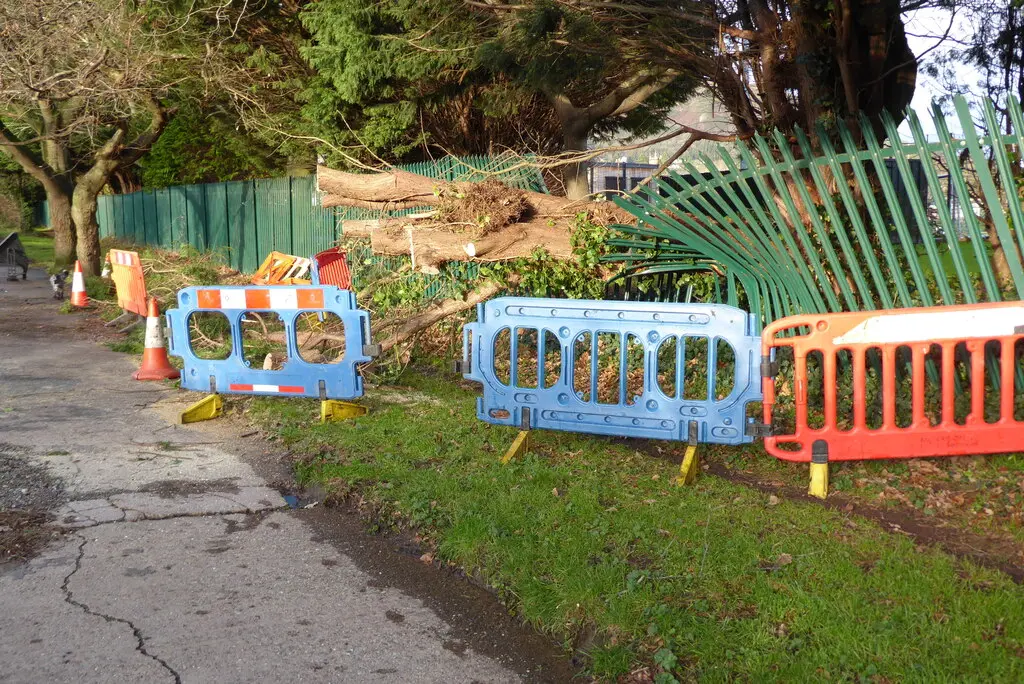
After a thunderstorm or a tropical system, a property may have a hung limb, a broken leader, brush in the yard, and one tree down. Cleanup means making that list into a scope: what is aerial, what is on the ground, and what is simply debris. Chipping, hauling, and leaving wood are choices, not assumptions.
Searches for storm tree removal, tree debris removal, and fallen-tree cleanup overlap here. A single trunk on the ground can stay on the fallen tree page. Hanging limbs in a living tree may be trimming once the hazard is stable.
Safety before a cleanup request
- Stay out from under hanging wood.
- Downed or arcing lines go to Tampa Electric, 813-228-1111. Non-emergency line clearance is a different TECO number, 813-228-1010, which the city also publishes.
- Trees in the public right of way are the city’s forestry problem. Private cleanup does not assign those trees to this form.
- Do not run a generator in a closed garage while you wait, and do not use a candle near broken limbs and dry debris.
Timing after a storm
After a wide storm, crews are booked in the order the work can be reached. Sending the form asks for a review. It does not put the property first in line or dispatch a truck.
What to include so the scope is real
- How many trees are affected, even a rough count.
- What is hanging versus what is on the ground.
- Whether a structure, vehicle, or fence is involved.
- Whether you need haul-away or only the aerial hazard made stable.
- Access if roads are blocked or the gate is damaged.
No storm-cleanup price is published. The count and the targets are the quote.
After the immediate wood is handled
A broken tree that is still standing may need a later pruning cut or a removal once it can be evaluated calmly. That follow-up is a new scope. Permit questions return if a protected tree is still upright and someone wants it removed rather than cleaned up.